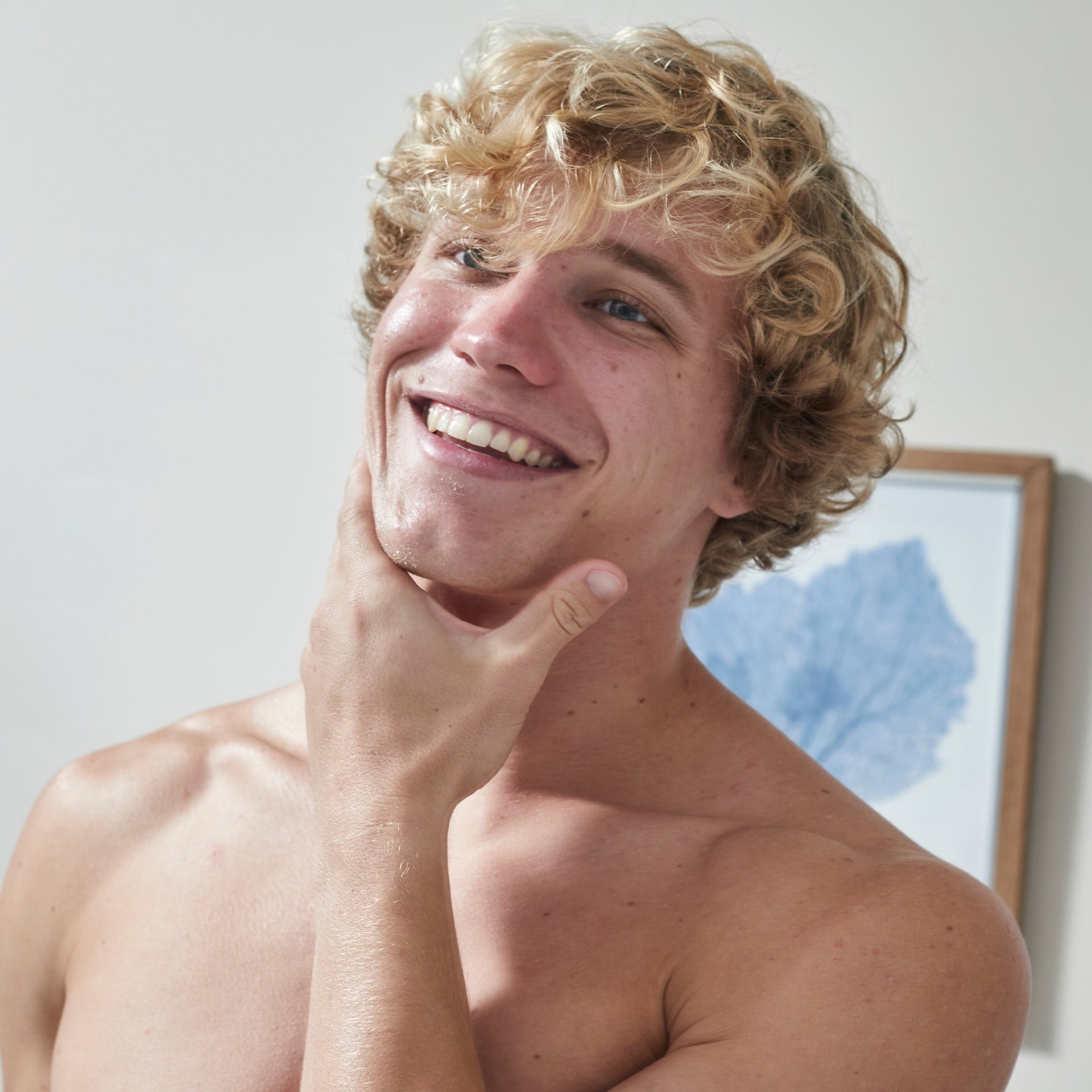
A night of drinking shows up on your face the next morning as flushing, puffy eyes, and skin that looks dull and flat. Alcohol widens your blood vessels, pulls water out of you, and breaks up the second half of your sleep. Each of those independently makes a face look worse, and they tend to arrive together.
TL;DR: A "skin hangover" is the visible version of a regular hangover — redness from dilated vessels, fluid pooling under the eyes, and dull, dehydrated-looking skin. Most of it clears on its own within a day or two. What you do that night and the next morning mostly determines whether it clears in one day or three.
What is a skin hangover?
A skin hangover is the set of visible changes your face goes through after drinking: redness across the cheeks and nose, swelling around the eyes, and skin that reads dry or slightly gray. It isn't a diagnosis. It's a plain description of what alcohol does to circulation, fluid balance, and sleep, all of which show up on your face before they show up anywhere else. Most guys notice it more in November and December than in June, because party season and dry indoor heat land in the same eight weeks.
Why does alcohol make your face red?
Alcohol is a vasodilator, meaning it relaxes the small blood vessels near the surface of your skin so more blood flows through them. That's the flush you see an hour into the night, and it can linger into the next morning. For most guys it fades. For some it doesn't fade cleanly: the American Academy of Dermatology points to a study of 82,737 women followed for 14 years in which drinkers had a higher risk of developing rosacea than non-drinkers, with white wine and liquor linked to the largest increase. The AAD is careful to call this a link rather than proof that alcohol causes rosacea. If your face stays red for days after a night out, that's worth a conversation with a dermatologist rather than a new face wash.
Why are your eyes puffy and dark the next morning?
The skin around your eyes is the thinnest on your face, so fluid that shifts overnight collects there first and shows there worst. Alcohol contributes twice over. It disrupts sleep architecture — a review of 20 studies on alcohol and normal sleep found that drinking suppresses REM sleep and fragments the back half of the night, even when it helps you fall asleep faster. Then the fluid itself pools while you're lying flat, which is why the puffiness is worst in your first hour awake and better by lunch.
Why does your skin look dull after drinking?
Alcohol suppresses vasopressin, the hormone that tells your kidneys to hold onto water, so you lose more fluid than you take in. Cleveland Clinic explains that this is why a few drinks send you to the bathroom repeatedly and leave you short on water by morning. Dehydrated skin doesn't reflect light the way hydrated skin does, which is most of what people mean when they say their face looks dull. Water helps, but the faster visible fix is sealing in the moisture you have left, which is what a nighttime moisturizer like PM is for.
What should you do the morning after?
Keep it simple, because you aren't going to do anything complicated in that state. Wash with something gentle — WASH works here precisely because it isn't harsh, and stripping already-dehydrated skin makes the dullness worse. Skip the scrub that morning; exfoliating flushed, irritated skin is the one move that reliably backfires. Moisturize while your face is still damp. Something cold under the eyes for a minute helps the swelling, and so does standing upright and drinking water, which work on the same fluid problem from different ends.
What routine actually handles this?
If the morning-after face is recurring for you between Thanksgiving and New Year's, the eye area is where you probably lack coverage. Cleanser and moisturizer handle the dullness but do nothing specific for puffiness or shadowing. That's the gap Skin Care System Level 2: The Advanced Routine fills — the four-product Level 1 lineup plus EYES, which helps reduce the appearance of puffiness and dark circles over time. That matters more across a month of parties than on any single morning. If the eye area isn't your issue and you just want the baseline covered, Level 1 is enough. Puffiness also has causes well beyond alcohol, several of them commonly misattributed, which we covered in our piece on whether "cortisol face" is real.
Frequently asked questions
How long does a skin hangover last?
Usually 24 to 48 hours. Puffiness is worst within the first hour of waking and largely resolves by midday. Redness and dullness take longer, generally fading over a day or two as you rehydrate and sleep normally.
Does drinking water before bed prevent it?
It helps with the dehydration piece, which is a real part of the problem. It does nothing about the vasodilation or the disrupted sleep, so it reduces the damage rather than preventing it.
Does alcohol cause acne?
Not directly, though it can contribute indirectly through poor sleep, dehydration, and the food that tends to come with drinking. We looked at the evidence in our breakdown of alcohol and acne.
Does one drink do this?
Generally no. The flushing response varies between people, and some men flush noticeably on a single drink while others don't. The sleep and fluid effects scale with how much you drink and how close to bedtime you drink it.
Is the damage permanent?
From a single night, no — the visible effects are temporary. Persistent flushing that never fully resolves is a different matter, and a reason to see a dermatologist rather than something to manage with skincare.