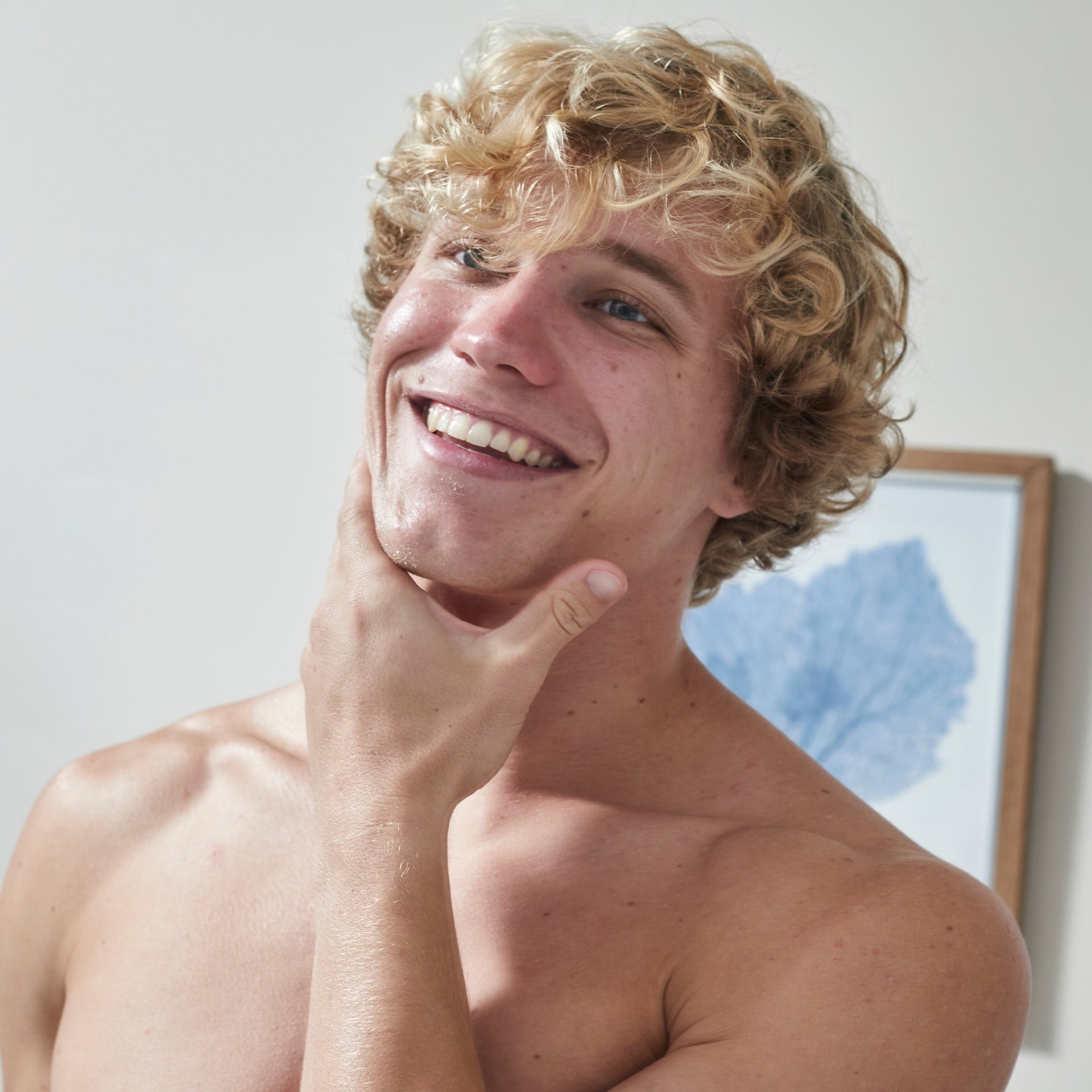
Partly. The unglamorous core of sleepmaxxing — a consistent schedule, a cool dark room, no alcohol or screens right before bed — is the part with evidence behind it, and it does change how rested your face reads to other people. The hardware stacked on top of it, from mouth tape to nightly sleep scores, has much thinner support.
TL;DR
Sleep genuinely affects your skin, but the effect comes from getting enough of it consistently, not from the gear. Research links poor sleep to faces being rated more tired and to slower skin barrier recovery. Mouth taping has little evidence behind it and a documented risk for anyone with a blocked nose. Fix the sleep, and use a routine that handles the eye area in the meantime.
What is sleepmaxxing?
Sleepmaxxing is the social-media name for treating sleep as something to optimize rather than something that just happens to you. In practice it spans ordinary sleep hygiene — fixed bedtime, cold room, no caffeine after lunch — alongside magnesium stacks, mouth tape, nasal strips, red lighting, and wearables that hand you a score every morning. The label is new. Most of the advice underneath it is decades old.
Does bad sleep actually show up on your face?
Yes, and strangers can see it. In an experiment from Karolinska Institutet published in the BMJ, 23 people were photographed twice — once after normal sleep, once after sleep deprivation — under identical lighting, with neutral expressions and no grooming differences. Sixty-five observers rated the sleep-deprived photos as less healthy, less attractive, and more tired. Nothing structural had changed in a day. The face simply read differently.
Does poor sleep do more than make you look tired?
There is some evidence it does. A 2013 study run at University Hospitals Case Medical Center, commissioned by Estée Lauder, compared 60 women sorted into good and poor sleepers. The poor sleepers scored higher on a clinical measure of intrinsic skin aging and recovered more slowly after the skin barrier was deliberately stressed — at 72 hours, barrier recovery measured 14 percent in good sleepers versus negative 6 percent in poor sleepers. Worth knowing the limits: small sample, women only, funded by a cosmetics company. It points a direction rather than closing the question.
Skin also loses more water overnight than it does during the day, which is the plain argument for finishing the evening with a nighttime moisturizer like Tiege Hanley's PM rather than going to bed on a bare face. More on that in our breakdown of what your skin actually needs at night.
Which parts of the sleepmaxxing stack are worth your time?
The boring ones. Reviews of sleep hygiene research find the strongest support for keeping noise down, avoiding alcohol before bed, skipping mentally demanding work right before sleep, and not straining to fall asleep. Support is weaker for the things people fixate on, like mattress firmness or removing the bedroom clock. The American Academy of Sleep Medicine also stops short of recommending sleep hygiene on its own as a treatment for chronic insomnia — if your sleep has been broken for months, a tracker is not the answer and a doctor might be.
Does mouth taping help your skin?
The evidence does not support it, and it carries real risk. A 2025 systematic review in PLOS One pooled 10 studies covering 213 patients and concluded the data do not support mouth taping as a treatment for sleep-disordered breathing. Four of those studies raised a serious asphyxiation risk for people whose mouth breathing stems from a blocked nose — hay fever, chronic rhinitis, a deviated septum. If your nose does not work, taping your mouth shut is not a skin hack. It is a breathing problem waiting to happen.
So what routine actually handles looking tired?
Sleep addresses the cause; a routine handles what is visible while you work on it. The area that gives you away is the skin around your eyes, which is thinner than the rest of your face and the first place shadowing and puffiness show after a short night. That is exactly the difference between the two core Tiege Hanley systems. Skin Care System Level 2: The Advanced Routine takes the four Level 1 steps and adds EYES, an eye cream formulated for the appearance of dark circles, puffiness, and crow's feet. If the specific complaint is that you look tired in photos, that is the step aimed at it, and it adds about fifteen seconds to a routine you are already doing. It will not substitute for sleep, and it is not meant to. If puffiness is your main issue, it is also worth reading why "cortisol face" is mostly misdiagnosed.
Frequently asked questions
How much sleep does your skin need?
Most adults need seven to nine hours a night, and consistency matters as much as the total. The research linking sleep to skin looks at habitual sleepers over weeks and months, not at one heroic night of ten hours after a bad week.
Does one bad night of sleep ruin your skin?
No. One short night mainly shows up as puffiness and shadowing around the eyes, and it resolves. The findings on barrier recovery and intrinsic aging come from people who sleep poorly as a pattern, not occasionally.
Should you wash your face before bed?
Yes. A day's worth of sweat, oil, and sunscreen does not belong on your pillow, and a gentle cleanser such as WASH handles it in about twenty seconds. It is the single step most guys skip when they are tired, which is also when it matters most.
Do sleep trackers improve your skin?
Not directly. A tracker measures; it does not change anything on its own. For some people the data prompts an earlier bedtime, which helps. For others it becomes one more thing to feel anxious about at 2 a.m., which does not.